
Palm Bay, FL Water Filtration Issues Every Homeowner Should Know
If your faucets sputter, water tastes odd, or filters clog fast, you may be facing whole house water filter problems. Homeowners across the Space Coast rely on filtration, but small issues can snowball into leaks, pressure loss, and poor taste. In this guide, you’ll learn the root causes, simple checks you can do today, and the pro fixes that restore clean, great-tasting water. We’ll also flag when repair beats replace, and how to prevent the same problems from coming back.
Signs Your Whole-House System Is Struggling
Whole-home filtration should deliver clear, clean water from every tap. When things slip, the signs show up fast.
- Noticeable drop in water pressure across the house.
- Cloudy water, grit in glasses, or recurring stains.
- Chlorine taste or sulfur odor that returns between filter changes.
- Short filter life and frequent clogs.
- Leaks or drips near housings, valves, or the bypass.
- Icemaker scale, spotted dishes, or scratchy laundry in hard water zones.
These flags often point to an undersized system, wrong media, missed maintenance, or plumbing issues upstream. In Brevard County cities like Palm Bay, Melbourne, and Merritt Island, hardness and chlorine vary by neighborhood. Matching media to your water profile is key. That is why proper water testing should come before equipment changes. NSF/ANSI 42 certified carbon media targets chlorine taste and odor, while NSF/ANSI 58 reverse osmosis reduces dissolved solids.
Low Water Pressure After Installation
A small pressure dip is normal after adding filtration. A big drop is not. The usual culprits are clogged pre-filters, undersized housings, or a pressure regulator set too low.
What to check first:
- Inspect the sediment pre-filter. If it is gray or brown, replace it.
- Confirm the micron rating. Going too fine can choke flow.
- Look for kinks or partially closed valves around the filter rack.
- Read the home’s static pressure with a gauge. Typical target is 50 to 70 psi.
When to call a pro:
- Repeated pressure loss within weeks points to poor media match or heavy silt. A plumber can re-stage filters and add a spin-down pre-filter if needed.
- If you have a pressure regulator, it may be failing. Replacement restores steady flow.
Hard fact: Many carbon housings list a flow rating at 60 psi. If your home runs near 40 psi, the real flow will be lower. Sizing by gallon-per-minute demand avoids this trap.
Persistent Taste or Odor After Carbon Filtration
Granular activated carbon removes chlorine and many volatile organic compounds. If taste or odor lingers, there are a few reasons.
- Exhausted media. Carbon has a finite adsorption capacity.
- Channeling inside the tank allows water to bypass the media bed.
- Not enough contact time. A single small cartridge may not treat the whole home.
- Sulfur or iron bacteria that carbon alone cannot fix.
Your action plan:
- Replace carbon on schedule. For many homes, that is 6 to 12 months for cartridges, longer for tanks.
- If you smell sulfur or see orange staining, add the right pre-treatment. A chlorinator or iron filter may be required.
- Consider a larger carbon bed or a two-stage setup to increase contact time.
Local note: Cocoa and Rockledge homeowners often notice chlorine taste after utility line work. A quick media refresh and proper backwashing usually resolves it.
Leaks Around Filter Housings
Drips waste water and can damage cabinetry or drywall. Leaks most often come from worn O-rings, over-tightened sumps, or cross-threaded housings.
Prevention and fixes:
- Lubricate O-rings with food-grade silicone every filter change.
- Hand-tighten housings. Use the wrench only to snug, not torque.
- Replace cracked bowls immediately. UV light and age can weaken plastic.
- Install a leak detector with automatic shutoff for peace of mind.
If leaks return, upgrade to higher quality housings or a tank-based system. Professional installers pressure-test each joint and add isolation valves for clean service down the road.
Reverse Osmosis Issues: Slow Flow, TDS Creep, and Odor
Reverse osmosis can remove up to 99 percent of dissolved solids, including lead and some bacteria. Still, RO has unique failure modes.
- Slow flow at the dedicated tap often means a clogged pre-filter, fouled membrane, or low tank pressure.
- TDS creep shows as rising dissolved solids after the system sits. A worn check valve or membrane is common.
- Odor can result from stagnant water in lines or a spent post-filter.
What to do:
- Replace pre- and post-filters on schedule. Many homes need 6 to 12 months.
- Test tank pressure with the water off and tank empty. Aim for 7 to 8 psi.
- Flush the system after long vacations to purge stale water.
Whole-home RO adds complexity. A typical install includes a sediment pre-filter, a high-pressure pump, the RO membrane, a post-filter, and often a storage tank. Sizing and pump control are critical to keep flow and protect fixtures.
Hard Water Scale Despite a Conditioner or Softener
If you still see scale on shower doors or feel stiff laundry, review the setup.
- The softener may be undersized for your flow rate or grain load.
- Resin can foul with iron or manganese if not protected by pre-treatment.
- Incorrect salt settings or a stuck injector can weaken regeneration.
Steps to take:
- Test hardness in and out. If hardness does not drop near zero, service is needed.
- Add an iron filter or change resin if iron is present. EPA’s secondary standard for iron is 0.3 mg/L for aesthetics.
- Optimize salt dose and regeneration frequency to match your water use.
Water conditioners that alter crystal structure reduce scale on surfaces but do not change hardness readings. If expectations are not set, homeowners think the unit failed. Clear education avoids confusion.
UV Systems and Bacteria Control
Ultraviolet treatment kills bacteria and viruses without chemicals. If a UV system underperforms, look at two things: lamp age and water clarity.
- UV lamps typically need replacement every 12 months.
- Cloudy water blocks light. Turbidity must be reduced by pre-filtration.
Maintenance checklist:
- Replace the lamp on time and clean the quartz sleeve.
- Add a sediment filter ahead of UV to maintain clarity.
- Install a UV sensor or alarm if your model supports it.
Homes with private wells in Sebastian and Cocoa Beach often benefit from UV or a chlorinator, especially after storms. UV is a final barrier. It does not improve taste, so pair it with carbon for best results.
Filter Longevity and Realistic Maintenance Schedules
Every media has a clock. Pushing past service life invites problems.
Typical intervals in our market:
- Sediment cartridges: 3 to 6 months depending on silt load.
- Carbon cartridges: 6 to 12 months. Carbon tanks: 2 to 5 years for media.
- RO pre- and post-filters: 6 to 12 months. Membranes: 2 to 5 years.
- UV lamps: 12 months.
- Softener resin: 10 years on average, sooner with iron.
A maintenance plan locks these dates in, bundles visits, and reduces risk. It also protects connected equipment like water heaters. Keeping minerals and grit out extends heater life and helps maintain efficiency.
Magnetic and Infrared Devices: What to Expect
Magnetic filtration and infrared systems are used to address mineral buildup and improve taste. Results vary because these methods do not remove minerals the same way RO or softeners do.
Best uses:
- As part of a multi-stage approach for scale management.
- When homeowners want less salt use but still need some scale reduction.
For heavy hardness or specific contaminants, testing should drive the choice. A pro can confirm whether these options fit your home or if a softener, iron filter, or RO is the right call.
When to Repair vs Replace
Knowing when to stop throwing parts at a system saves money.
Repair if:
- The system is under 5 years old and parts are available.
- Issues are limited to consumables like cartridges, lamps, or O-rings.
- Flow and taste were good before a recent event, like city line work.
Replace if:
- Your media tank is 10 to 12 years old with repeated channeling.
- Plastic housings show UV damage or stress cracks.
- Your family size or water demand grew and the system is undersized.
- You want fewer service visits by moving to higher-capacity media.
A free water quality test pinpoints the cause first. That prevents spending on equipment you do not need.
How Professional Installation Prevents Problems
Many headaches trace back to the first day. Proper layout, isolation valves, unions, and bypass piping make maintenance simple and clean.
What pros add:
- Correct sizing using fixture counts and peak flow.
- Staged filtration: sediment, carbon, specialty media, then UV if needed.
- Pressure testing and leak checks before handoff.
- Clear labels and a written maintenance schedule.
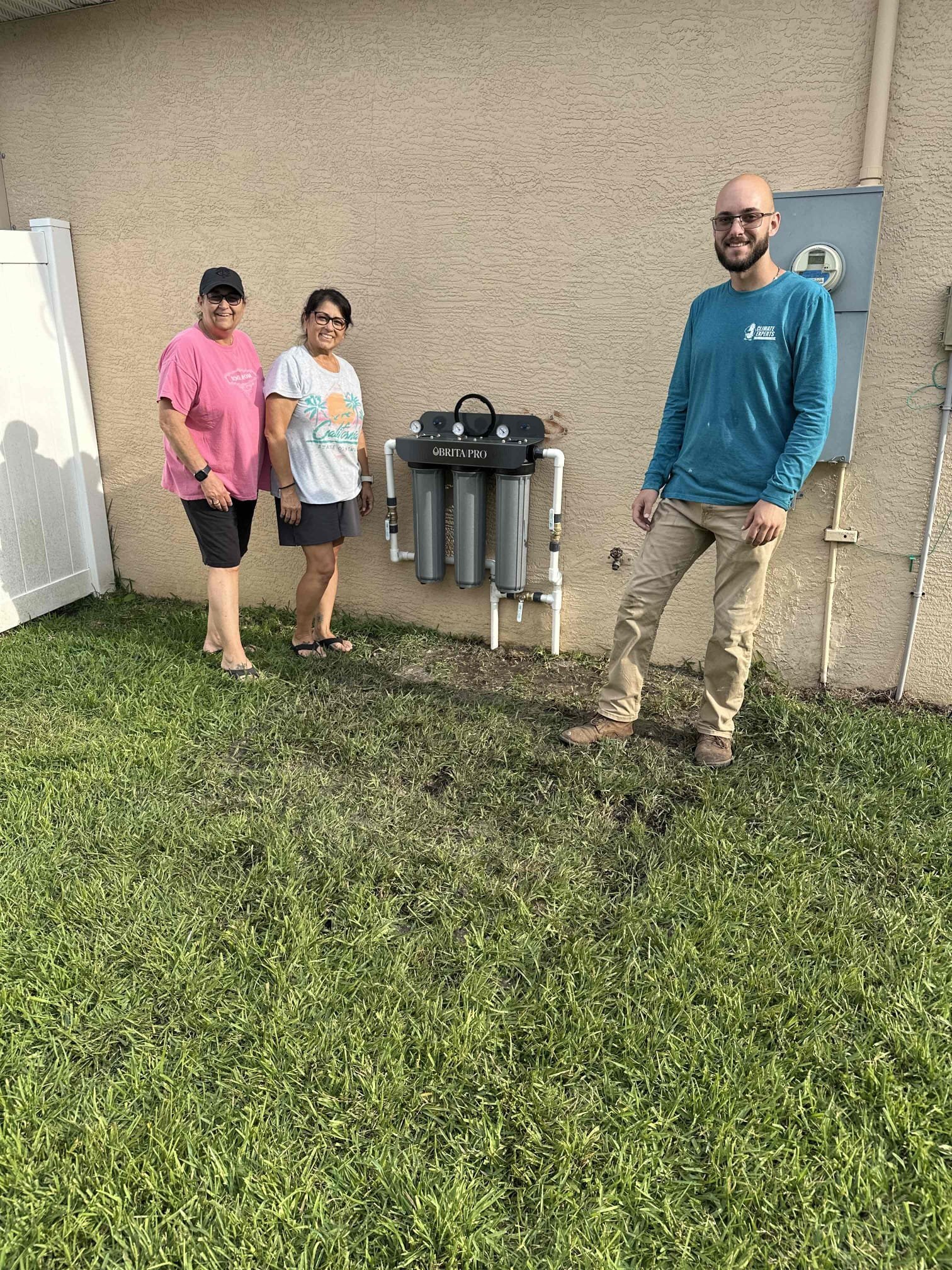
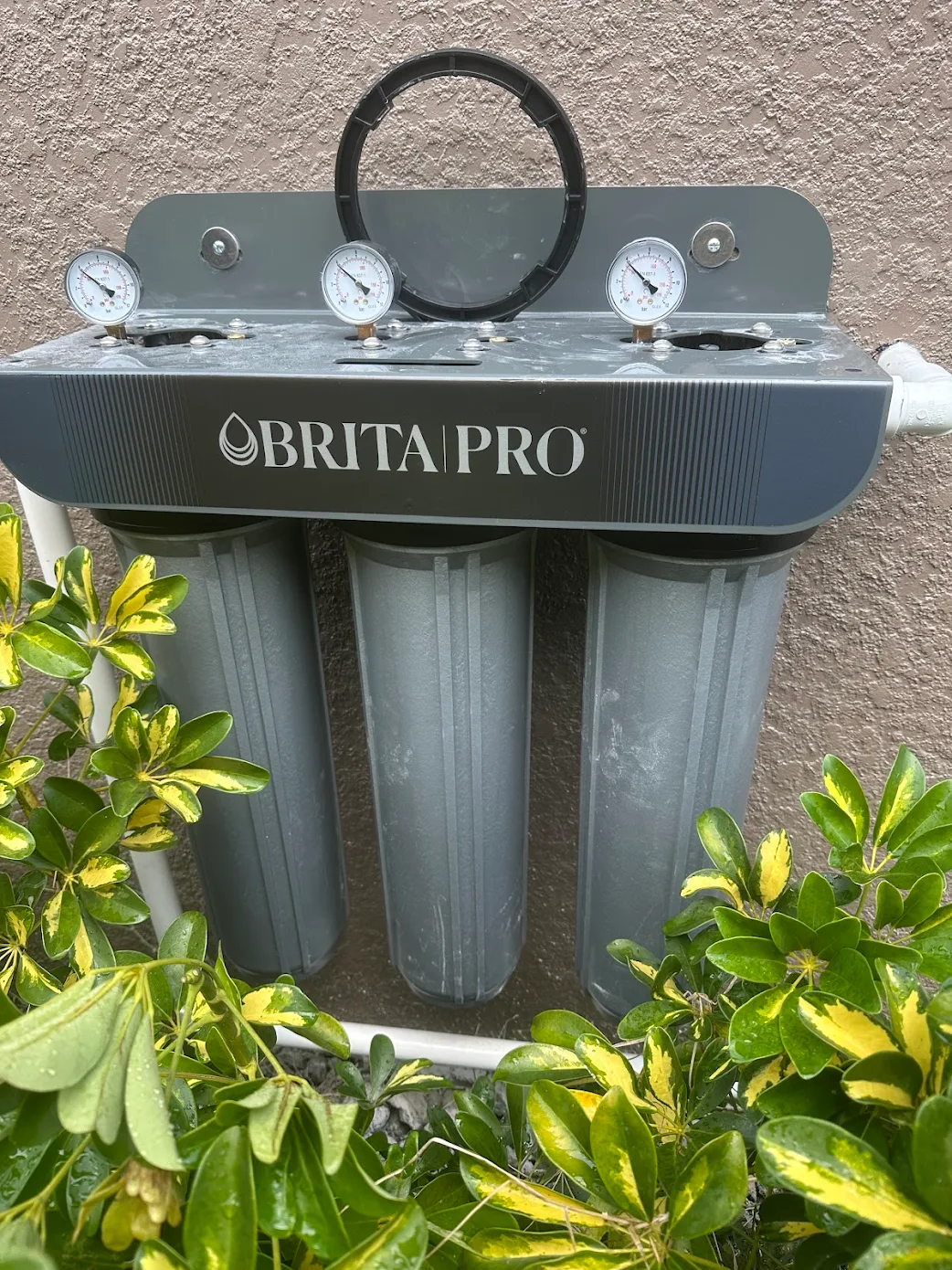
Climate Experts partners with Brita Pro for whole-home solutions and follows manufacturer specs. Our installers are trained in-house and field-tested. That keeps your water clean, flow strong, and service fast.
Local Water Insights for the Space Coast
Brevard County blends municipal and well sources. Hardness and chlorine levels change by neighborhood and season. After heavy rain or utility work, you may notice taste shifts or sediment spikes.
Local tips:
- Keep one spare sediment and carbon cartridge on hand.
- Test annually or after major plumbing work.
- If you own a rental or seasonal home in Satellite Beach or Cape Canaveral, schedule service before arrivals.
Two hard facts for homeowners:
- NSF/ANSI 42 certification covers chlorine taste and odor reduction for carbon media.
- RO systems verified to NSF/ANSI 58 are designed to reduce total dissolved solids.
Armed with testing and the right gear, your home can have safe, great-tasting water year-round.
Special Offer: Free Water Quality Test
Save today on cleaner water. Free Water Quality Test ($99 value) for homeowners considering filtration or softener upgrades. Use code FREEWATER before July 31, 2026. Terms apply. Call (321) 345-3415 or visit https://climateexpertsac.com/ to schedule. Cannot be combined with other offers. Qualifying equipment only.
What Homeowners Are Saying
"I’m very impressed with Climate Experts in the quality and timeliness of their work. I had some attic ducting, a whole home water treatment system, and reverse osmosis installed and everything has turned out great... they were all highly professional. Thanks!"
–Sam Customer, Melbourne
Frequently Asked Questions
How often should I change whole-house carbon filters?
Most cartridges last 6 to 12 months, but heavy sediment or chlorine can shorten that. Tank-based carbon often needs media every 2 to 5 years. Testing guides timing.
Why did my water pressure drop after installing a filter?
Clogged pre-filters, undersized housings, or a low pressure regulator are common. Check the sediment cartridge first, then verify your home’s psi and filter sizing.
Do I need UV if I have city water?
Usually no, but UV adds a safety barrier for wells or after line repairs. If tests show bacteria or you have a sulfur odor, consider UV with proper pre-filtration.
Is reverse osmosis right for the whole house?
It can be, but it requires correct sizing, a pump, and often a storage tank. Many homes use RO at the kitchen sink and carbon or softening for whole-house needs.
What certifications should I look for?
NSF/ANSI 42 for chlorine taste and odor reduction and NSF/ANSI 58 for RO. These standards verify performance claims for common household concerns.
Conclusion
Whole house water filter problems usually trace back to sizing, media choice, or maintenance. With proper testing and pro installation, you get clear, great-tasting water and steady flow. For trusted help with whole house water filter problems in Melbourne, Palm Bay, and nearby cities, call our team today.
Call to Action
Ready for cleaner water? Schedule your Free Water Quality Test now. Call (321) 345-3415 or book at https://climateexpertsac.com/. Mention code FREEWATER before July 31, 2026 for your $99 value test. Let Climate Experts assess, install, and maintain the right system for your home.
Call now: (321) 345-3415 • Book online: https://climateexpertsac.com/ • Coupon: FREEWATER (Free Water Quality Test, expires 07/31/2026)
Climate Experts Air, Plumbing & Electric is Central Florida’s trusted team for water filtration, plumbing, HVAC, and electrical. We partner with Brita Pro, operate a full in-house training facility, and back our work with long warranties up to 12 years. We provide 24/7 live phone support and are A+ rated by the BBB with 500+ five-star reviews. From water testing to install and maintenance, we deliver clean, safe water for Space Coast homes.
Sources9
Source links open in a new tab.
- FREE Water Quality Test ($99 value)climateexpertsac.com (opens in a new tab)
- SAME-DAY SERVICE GUARANTEED OR FREE SERVICE CALLclimateexpertsac.com (opens in a new tab)
- Limited Time Offer: $39 HVAC, Plumbing or Electric Service Callsclimateexpertsac.com (opens in a new tab)
- $19/MONTH OR $228 ANNUALLYclimateexpertsac.com (opens in a new tab)
- Happy comment by Dave Bigglesworthgoogle.com (opens in a new tab)
- Whole House Water Filter Installers in Melbourne, FLclimateexpertsac.com (opens in a new tab)
- AC Repair, Heating & Plumbing - HVAC Company in Melbourne FLclimateexpertsac.com (opens in a new tab)
- AC Repair vs Replacement in Melbourne, FLclimateexpertsac.com (opens in a new tab)
- Hydro Jetting Services in Melbourne, FL - Climate Expertsclimateexpertsac.com (opens in a new tab)