
Cocoa Beach Water Filtration: Best Whole‑House Install Spots
Wondering where to install whole house water filter equipment so it actually solves your water problems? The right location boosts flow, protects appliances, and keeps maintenance simple. In this guide, we map the ideal setup for Florida homes on city water or well systems, explain order of components like softeners, UV, and chlorinators, and share practical clearance and code tips. If you want help, Climate Experts offers a free in‑home water quality test and expert installation across the Space Coast.
Why Filter Location Matters More Than You Think
A whole house water filter protects every tap, so placement affects water pressure, appliance life, and ongoing maintenance. A smart location will:
- Capture contaminants before they reach fixtures and your water heater.
- Preserve flow by matching pipe size and minimizing pressure drop.
- Simplify service with clear access, a drain, and a clean mounting surface.
- Provide a safe, code-compliant install with proper shutoffs and a bypass.
Most systems use one or more stages. Carbon filtration reduces chlorine, VOCs, and taste or odor issues. Reverse osmosis can remove up to 99% of dissolved solids including lead and bacteria, but RO is usually point of use, not whole house. UV treatment neutralizes pathogens. Conditioners or softeners address hardness. Your layout should position these in a sequence that treats the water efficiently without choking flow.
The Ideal Location in Most Florida Homes
The gold standard placement is on the main cold-water line:
- After the main shutoff valve.
- Before any branch lines split to fixtures or outdoor taps you want filtered.
- Before the water heater to protect the tank and elements from sediment and scale.
This layout ensures every fixture receives filtered water and your heater avoids scale buildup. It also gives you a single service point with a bypass loop for emergency water while you change filters.
Common spots that meet these rules in Space Coast homes include:
- Garage near the water heater or manifold.
- Interior utility room or laundry area with the main line accessible.
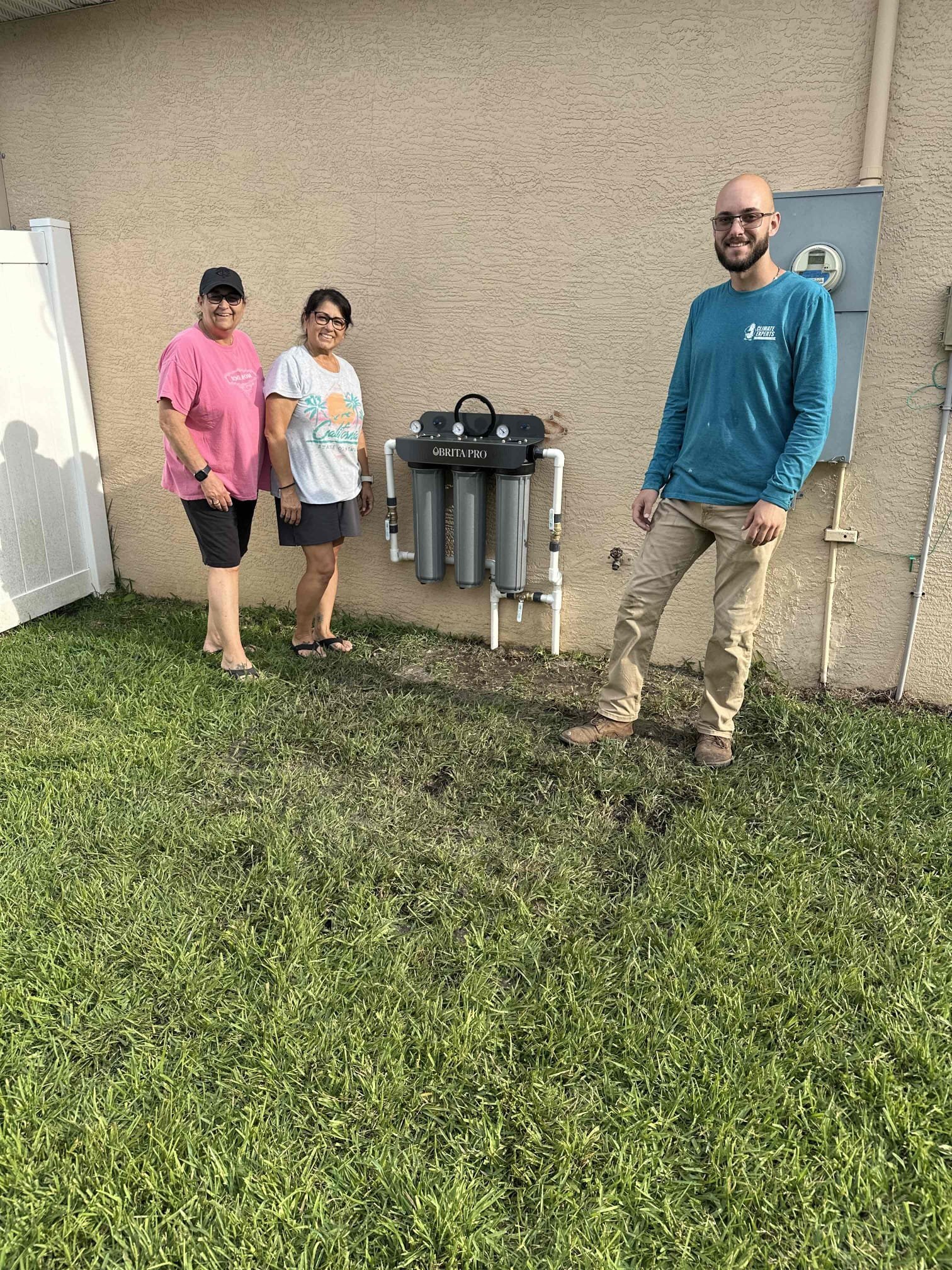
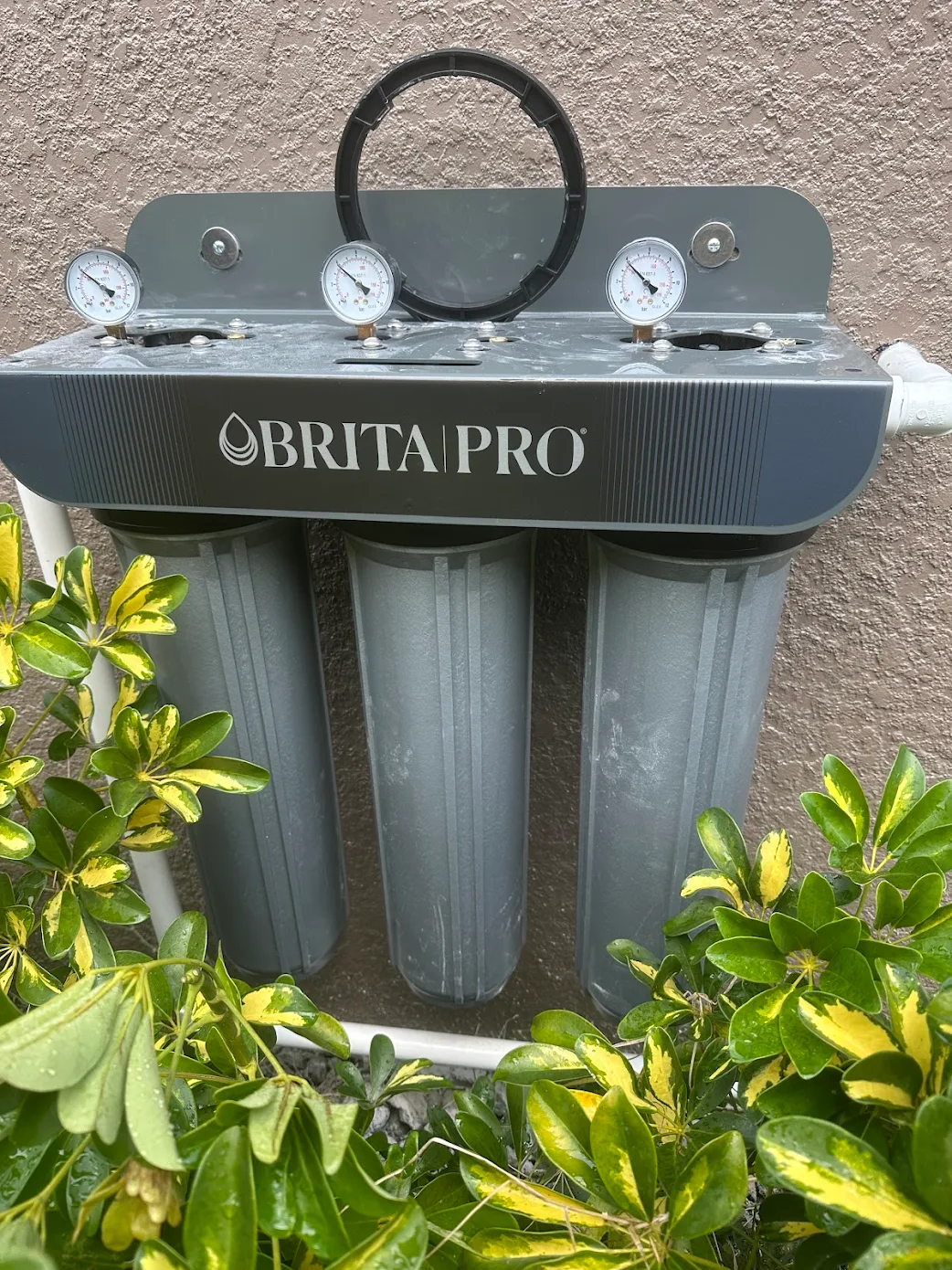
- Exterior wall near the meter for slab-on-grade homes, inside a protective enclosure.
Where you mount depends on how your main line enters and whether you are on city water or a well.
City Water Homes: Meter-to-Filter Order
City water service typically enters from the street to a meter box and often a backflow preventer. If you have a pressure reducing valve, the order matters. A clean, serviceable sequence looks like this:
- City meter and shutoff at the street.
- House main shutoff.
- Pressure reducing valve (if present) to stabilize downstream pressure.
- Sediment or carbon prefilter housing sized to your pipe.
- Primary whole house carbon filter or multi-stage unit.
- Optional UV system or chlorinator if microbiological treatment is required.
- Branch lines to fixtures and the water heater.
This order protects your fixtures and heater while preserving stable pressure across the home. It also places maintenance items where you can safely depressurize the system at the house shutoff.
Well Systems: Pump-to-Filter Order
On private wells, filtration must follow the well equipment. The reliable sequence is:
- Well pump.
- Pressure tank.
- Sediment prefilter to capture sand or silt.
- Primary carbon filter to reduce taste, odor, and chemicals.
- Optional softener or conditioner for hardness control.
- Optional UV system for pathogen control.
- Optional chlorinator for iron, sulfur, or bacteria when needed.
- Branch lines and water heater.
Placing the filter after the pressure tank avoids starving the pump and ensures steady flow to the filtration stages. If you battle sulfur smell or iron staining, a chlorinator or targeted media can be added before the carbon stage, then dechlorinated by carbon.
Where to Physically Mount the System
- Garage or utility room: Most convenient for service. Choose a clean, dry wall near a floor drain or where a bucket can be used. Maintain 12 to 18 inches below the housing for cartridge changes.
- Exterior wall: Common for slab-on-grade homes. Use a weather-resistant cabinet with lock, keep out of direct sun to protect plastics and maintain UV system performance, and add freeze protection if needed during rare cold snaps.
- Equipment wall near the heater: Works well if the main line is nearby. Always filter before the heater, not on the hot outlet.
Key mounting guidelines:
- Clearance: Leave space to swing filter housings down, remove UV lamps, and service control heads.
- Bypass: Install a three-valve bypass so you can keep water on during maintenance.
- Supports: Use sturdy brackets and backer boards for heavy tanks or carbon units.
- Drain and floor protection: Plan for water release during cartridge swaps and softener regeneration.
The Right Sequence With Softeners, UV, RO, and Chlorinators
Correct order avoids media fouling and keeps UV lamps and RO membranes effective.
- Typical order for city water with chlorine: Sediment prefilter, carbon filter, then UV if needed.
- With hard water: Sediment prefilter, primary carbon filter, softener or conditioner, then UV.
- With iron or sulfur: Chlorinator or iron/sulfur system, contact tank if required, carbon filter to remove chlorine and odors, then UV.
- Reverse osmosis: Usually installed at the kitchen sink or fridge as point of use. Whole house RO exists, but it requires prefiltration, a high-pressure pump, a membrane, a post-filter, and often a storage tank. It also needs a drain and careful sizing to maintain household flow.
Climate Experts installs carbon, RO, UV, magnetic and infrared filtration, and softeners. We tailor the order to your test results so each stage enhances the next.
Sizing and Pressure: Avoid Starving Your Home’s Flow
Choose a system that matches pipe size and peak demand. Consider:
- Pipe size: Do not downsize 1 inch mains to 3/4 inch filters unless the unit is rated for equivalent flow.
- Peak flow: Size for simultaneous fixtures. A 2 to 3 bath home may need 10 to 12 GPM. Larger homes may need 15+ GPM.
- Pressure drop: Quality carbon filters have published pressure drop at set flows. Keep the drop modest to maintain shower performance.
- Media tank size: Larger tanks reduce pressure loss and lengthen contact time for better chlorine and odor reduction.
If you notice big pressure swings, add or service a pressure reducing valve, check for clogged cartridges, and confirm your filter matches your demand.
Installation Steps We Follow
- Test the water to identify chlorine, hardness, iron, sulfur, and bacteria.
- Select the correct technology: carbon, softening, UV, chlorination, or RO.
- Choose a location after the main shutoff and before branches and the heater.
- Mount sturdy brackets and set clearances for cartridges or lamps.
- Install a three-valve bypass and unions for easy service.
- Level and secure media tanks to prevent movement.
- Flush and sanitize lines, then pressure test.
- Verify flow, check for leaks, and label valves for homeowner use.
We handle everything from assessing water quality to installing the right system for your home, then show you how to use the bypass and change filters.
Maintenance Access and Filter Changes
Regular maintenance keeps performance high and warranties intact.
- Carbon cartridges: Change by manufacturer schedule or when pressure drops.
- Media tanks: Replace media based on water usage and test results.
- UV lamps: Replace annually and clean the quartz sleeve.
- Softeners: Refill salt, clean the brine tank, and check regeneration settings.
Climate Experts offers regular maintenance and filter replacements and can bundle water heater maintenance during the same visit to save time. A customized maintenance plan ensures you always have safe, great-tasting water.
Common Placement Mistakes to Avoid
- Installing after branch tees so only part of the house is filtered.
- Putting the filter on the hot-water outlet instead of the cold main.
- Skipping the bypass. You want water during maintenance.
- Mounting without clearance under housings or above a finished surface that can be damaged by spills.
- Ignoring exterior exposure. Sun and weather degrade plastics and UV performance.
A short pre-job walkthrough prevents all of these.
Local Insight: Space Coast Homes and Water
Homes in Palm Bay, Melbourne, Merritt Island, and surrounding areas are often slab-on-grade with garage utilities. That makes a garage wall near the heater a great spot as long as the main is accessible. City water can carry chlorine odor, which carbon excels at removing. Some properties in Cocoa and Rockledge rely on private wells, where sediment prefilters and UV are common. If you notice sulfur smell in Sebastian or Cocoa Beach homes, a chlorinator followed by carbon usually solves it.
We are partnered with Brita Pro for whole-home systems and install proven carbon technologies that cut bottled water use while protecting appliances from mineral and impurity buildup.
Permits, Codes, and Warranty Considerations
- Backflow: Your home may have a backflow preventer at the meter. Do not alter it. Place filters after your house shutoff.
- Supports and seismic stability: Heavy media tanks must be secured.
- Electrical: UV and some control valves need a nearby outlet.
- Manufacturer warranty: Requires proper order of treatment and maintenance.
- Licensing: Always hire licensed contractors. Our Plumbing License is CFC1432297 and we maintain BBB A+ accreditation.
We document the installation, label valves, and record startup readings for warranty protection.
Cost, Timeline, and What to Expect
- Timeline: Most garage-mounted installs take half a day. Exterior cabinet installs vary based on concrete and enclosure needs. Whole-house RO takes longer due to pumps, membranes, and storage.
- Investment: Pricing depends on flow rate, media type, and add-ons like UV or chlorination. City-water carbon starts lower than multi-stage well packages. We provide free estimates and clear options.
- Disruption: We shut off the main briefly, set the bypass, and flush lines. We protect floors and clean up before we leave.
You will walk away with labeled valves, maintenance dates, and a simple service plan.
How to Know You Picked the Right Spot
- Even water pressure throughout the home.
- No chlorine taste or odor at any tap after a brief flush.
- Heater operates quietly, with fewer scale issues.
- Simple, spill-safe filter changes with room to work.
- Clear line of sight to valves and media tanks.
If any of these are off, we can relocate or resize components to hit your goals.
When Whole-House RO Makes Sense
Whole-house RO can be right for specific water issues or high-end build specs. It includes a pre-filter for larger particles, a high-pressure pump to drive water through the membrane, a post-filter, and often a storage tank. The unit needs drain access and space for tanks. Because RO can lower pressure if undersized, precise placement and sizing are critical. Many families choose point-of-use RO at the kitchen and whole-house carbon for the rest of the home as a balanced approach.
Choosing the Best System for Your Home
- If chlorine taste or odor bothers you: Whole-house carbon near the main line solves it.
- If hardness causes spots and scale: Add a softener or conditioner after carbon.
- If your well has bacteria risk: Place UV after carbon and before branches.
- If iron or sulfur is present: Use a chlorinator or targeted media before carbon, then UV.
Not sure? Start with a free water test. We analyze your results, show you options, and recommend the exact location and sequence for best performance.
Special Offers on Water Filtration
- Special Offer: Free Water Quality Test ($99 value). Use code FREEWATERTEST before August 5, 2026.
- Free In-Home Tap Water Quality Assessment. Limited time.
- Free Estimates and Easy Booking for Water Filtration. Call (321) 345-3415.
- Bonus: Free Kitchen Water Filtration with purchase of a Water Heater, Full Drain System, or Full Repipe.
Call (321) 345-3415 or visit https://climateexpertsac.com/ to claim your offer. Terms and conditions may apply.
Frequently Asked Questions
Where should a whole house water filter be installed?
Most homes do best placing it after the main shutoff and before any branch lines and the water heater. This location filters every tap, protects appliances, and keeps service simple with a bypass.
Do I install the filter before or after a softener?
Install carbon filtration before the softener. This protects the softener resin and improves taste and odor. UV, if used, generally goes after softening and carbon, before branches.
Can I mount a filter outside in Florida?
Yes, if you use a weather-resistant enclosure, keep it out of direct sun, and provide clearance and freeze protection. Exterior installs are common on slab-on-grade homes.
Will a whole house filter reduce my water pressure?
A properly sized system will not. Match filter size to pipe size, select media tanks with low pressure drop, and change cartridges on schedule to maintain flow.
What is the correct order for a well system?
After the pressure tank, place a sediment prefilter, then carbon, then a softener if needed, followed by UV if bacteria is a concern. Add chlorination for iron or sulfur when required.
Wrap-Up: Get the Best Results From Your Whole House Water Filter
The best results come from smart placement on the main cold-water line before branches and the water heater, with the right sequence of carbon, softening, UV, and optional chlorination. If you are asking where to install whole house water filter equipment in Palm Bay, Melbourne, or Merritt Island, we will test, size, and install it right. Call (321) 345-3415, book at https://climateexpertsac.com/, and mention the Free Water Quality Test to save today.
Ready for Cleaner, Better-Tasting Water?
- Call now: (321) 345-3415
- Schedule online: https://climateexpertsac.com/
- Current deal: Free Water Quality Test ($99 value). Use code FREEWATERTEST before August 5, 2026.
We serve Palm Bay, Melbourne, Merritt Island, Saint Cloud, Cocoa, Rockledge, Sebastian, Cocoa Beach, Satellite Beach, and Cape Canaveral. Book your free test today and get a tailored, code-compliant install that protects your family and your plumbing.
About Climate Experts Air, Plumbing & Electric
We are a local, family-owned team serving Florida’s Space Coast with licensed plumbing, HVAC, and electrical experts. Our plumbers receive 180+ hours of annual training and are background checked and EPA certified. We hold BBB A+ accreditation, multiple industry awards, and offer long warranties. Licenses: HVAC CAC1818633, Plumbing CFC1432297, Electric EC13014915. Expect 24/7 live support, honest options, and workmanship that protects your home and water quality.
Sources11
Source links open in a new tab.
- FREE WATER QUALITY TESTclimateexpertsac.com (opens in a new tab)
- FREE Water Quality Test ($99 value)climateexpertsac.com (opens in a new tab)
- FREE INSTANT ESTIMATEclimateexpertsac.com (opens in a new tab)
- Happy comment by David Gonzalezgoogle.com (opens in a new tab)
- Happy comment by Lynne Parkergoogle.com (opens in a new tab)
- Happy comment by michael rigneygoogle.com (opens in a new tab)
- Happy comment by Paul Owengoogle.com (opens in a new tab)
- Whole House Water Filter Installers in Melbourne, FLclimateexpertsac.com (opens in a new tab)
- Expert Drinking Water Testing Melbourne, FL - Climate Expertsclimateexpertsac.com (opens in a new tab)
- Plumbing Services in Melbourne, FLclimateexpertsac.com (opens in a new tab)
- FREE Plumbing Leak Detectionclimateexpertsac.com (opens in a new tab)